Showing posts with label Africa. Show all posts

Tuesday, February 14, 2012

African Wallpapers 7

The long wait is over, finaly my African Wallpapers 7 post is here :-)

1400x900 widescreen wallpaper of a zebra herd in the Savannah in eastern Namibia
1600x1200: typical landscape in the north of South Africa

1'600x1'200 farmland and amazing mountains in Rwanda

1280x1024 buffalos in the green Savannah in rain season


1920x1200 lonely giraffe in the dry savannah

1600x1200 one leopard vs a impala herd

1920x1080 lone giraffe on the serengeti in Namibia

Sunday, July 31, 2011

Hi from Windhoek!

I promised you a surprise and here it is:

Today we (a friend and me) arrived in Windhoek, the capital of Namibia and hired a car with all the equipment we need. Tomorrow we will heading to the north, to the wild. It's dry season at the moment, so all animals are gathered at the few waterholes so we know where we can find them. Our destination is the Etosha National Park in the North of Namibia. There we will work togeter with the rangers on a research about the changing of the Migration with the climate change.

First impressions dor you:
Windhoek, a lovely City full of extremes

Our Car, we are sleeping in the tent on the roof of the car

Unfortunately there is no internet in the wild so you have to wait for about a week for the next Post/report from Africa...

Thanks for all your support, see you in a week ;-)

Saturday, July 30, 2011

Desert snake

Only a video today, but it's impressive, I promise you.


Sorry for the late post today, but I'm very busy at the moment. Why? I will tell you tomorrow, it will be a nice surprice :-)

Friday, July 29, 2011

Southern Africa by Air - Victoria Falls


The Victoria Falls or Mosi-oa-Tunya (the Smoke that Thunders, and note that the 'i' is silent) is a waterfall located in southern Africa on the Zambezi River between the countries of Zambia and Zimbabwe. The falls are the largest in the world.

Victoria Falls is one of the most famous falls, considered to be among the Seven Natural Wonders of the World. David Livingstone, the Scottish missionary and explorer, is believed to have been the first European recorded to view the Victoria Falls — which he did from what is now known as 'Livingstone Island' in Zambia, the only land accessible in the middle of the falls. David Livingstone gave the falls the name 'Victoria Falls' in honour of his Queen, but the indigenous name of 'Mosi-oa-Tunya' — literally meaning the 'Smoke that Thunders' — is also well known. The World Heritage List recognizes both names. While it is neither the highest nor the widest waterfall in the world, it is claimed to be the largest. This claim is based on a width of 1,708 metres (5,604 ft) and height of 108 metres (354 ft), forming the largest sheet of falling water in the world. The falls' maximum flow rate compares well with that of other major waterfalls.

National parks

The two national parks at the falls are relatively small — Mosi-oa-Tunya National Park is 66 square kilometres (16,309 acres) and Victoria Falls National Park is 23 square kilometres (5,683 acres). However, next to the latter on the southern bank is the Zambezi National Park, extending 40 kilometres (25 mi) west along the river.Animals can move between the two Zimbabwean parks and can also reach Matetsi Safari Area, Kazuma Pan National Park and Hwange National Park to the south.

On the Zambian side, fences and the outskirts of Livingstone tend to confine most animals to the Mosi-oa-Tunya National Park. In addition fences put up by lodges in response to crime restrict animal movement.

Vegetation

Mopane woodland savannah predominates in the area, with smaller areas of Miombo and Rhodesian Teak woodland and scrubland savannah. Riverine forest with palm trees lines the banks and islands above the falls. The most notable aspect of the area's vegetation though is the rainforest nurtured by the spray from the falls, containing plants rare for the area such as pod mahogany, ebony, ivory palm, wild date palm and a number of creepers and lianas. Vegetation has suffered in recent droughts, and so have the animals that depend on it, particularly antelope.

Wildlife

The national parks contain abundant wildlife including sizable populations of elephant, buffalo, giraffe, zebra, and a variety of antelope. Lion and leopard are only occasionally seen. Vervet monkeys and baboons are common. The river above the falls contains large populations of hippopotamus and crocodile. Elephants cross the river in the dry season at particular crossing points.

Klipspringers and clawless otters can be glimpsed in the gorges, but they are mainly known for 35 species of raptors. The Taita Falcon, Black Eagle, Peregrine Falcon and Augur Buzzard breed there. Above the falls, herons, Fish Eagles and numerous kinds of waterfowl are common.

A panoramic view from the Zambian side near the Knife-edge bridge

Tuesday, July 26, 2011

Africa Wallpapers 6

I've got some more beautiful Wallpapers for you. Hope you like them.
Whats your favourite?

1600x1200 African Elephants at Masaai Mara Parc in Kenya

16000x1200 Sunset in Botswana

2000x1333 Giraffes grazing in the Savannah of Kenya

1600x1200 Jumping contest in Kenya

1920x1200 Zebras in Namibia

1920x1200 Elephant in the Okavango Delta, Botwswana

for more Wallpapers check:

Africa Wallpapers 5
Africa Wallpapers 4
Africa Wallpapers 3
Africa Wallpapers 2
Africa Wallpapers 1

Friday, July 22, 2011

Desert Lions

Today I have an other documentary for you, it's about Lions living in the desert in Namibia.
Many years ago, lions thrived in the Namib Desert along the Skeleton Coast, while they are not destroyed people. Six years ago, an independent biologist Flip Stander found their small population, the remainder in the nearby mountains, and began to study them. Eventually their numbers increased, and they began to return to the desert. But to the lions continued to live here, Flip has to convince local residents that these lions are more alive than dead.


hope you like it ;-)

edit: if you like it check out this post Elephants in the Namib desert

Thursday, July 21, 2011

Southern Africa by Air - Okavango Delta

The Okavango Delta, in Botswana, is the world's largest inland delta. It is formed where the Okavango River empties onto a swamp in an endorheic basin in the Kalahari Desert, where most of the water is lost to evaporation and transpiration instead of draining into the sea. Each year approximately 11 cubic kilometres of water irrigate the 15,000 km² area and some flood-waters drain into Lake Ngami. The Moremi Game Reserve, a National Park, spreads across the eastern side of the delta.

The Okavango is home to a prosperity of wildlife and attracts thousands of visitors a year. There are camps within the delta region that cater to these visitors.

The delta provides a seasonal habitat to numerous different species. Among these are African elephants, the African Buffalo, the Hippopotamus, the Lechwe, the Topi, the Blue Wildebeest, the Giraffe, the Nile crocodile, the Lion, the Cheetah, the Leopard, hyenas, wild dogs, the Greater Kudu, the Sable Antelope, both the Black and the White Rhinoceros, the water monitor, zebras, the Warthog and then chacma baboon. The delta also includes over 400 species of birds, including the African Fish Eagle, the Crested Crane, and the Sacred Ibis.


Wednesday, July 20, 2011

The Serengeti

The Serengeti is a region of grasslands and woodlands in Mara Region in Tanzania.

It has more than 1.6 million herbivores and thousands of predators. Blue Wildebeests, gazelles, zebras and buffalos are the animals most commonly found in the region.


This area is most famous for the migration that takes place every year, which is considered to be one of the seven tourist travel wonders of the world and was named by the American television show Good Morning America and newspaper USA Today as one of the "New Seven Wonders of the World" in 2006.


Related Post: Wildebeest Migration

Tuesday, July 19, 2011

Africa Wallpapers 5

It's Wallpaperday again!!!
All Wallpapers are in 1600x1200 resolution

Running Black Feathered Ostrich

Giraffes at Masai Mara Game Reserve, Kenya

Hornbill at Krüger Park, South Africa

Sprinboks at Kgalagadi Transfrontier Park

Thirsty Giraffes at Etosha National Park, Namibia

Wildebeests and Sunrise at Masai Mara, Kenya

which one do you like most?

for more Wallpapers check:

Africa Wallpapers 4
Africa Wallpapers 3
Africa Wallpapers 2
Africa Wallpapers 1

Sunday, July 17, 2011

50 Posts - Oryx

Hey my Friends!!!

This is my 50th Post on BigOryx, I think I should tell you a little bit about the Oryx now:

Oryx is one of four large antelope species of the genus Oryx. Three of the species are native to arid parts of Africa, with a fourth native to the Arabian Peninsula. Their pelage is pale with contrasing dark markings in the face and on the legs, and their long horns are almost straight. The exception is the Scimitar Oryx, which lacks dark markings on the legs, only has faint dark markings on the head, has an ochre neck, and horns that are clearly decurved.


The Arabian Oryx was only saved from extinction through a captive breeding program and reintroduction to the wild. The Scimitar Oryx, which is now listed as Extinct in the Wild, also relies on a captive breeding program for its survival, Small populations of several oryx species, such as the Scimitar Oryx, exist in Texas and New Mexico (USA) in wild game ranches. Gemsboks were released at the White Sands Missile Range and have become an invasive species of concern at the adjacent White Sands National Monument.

Thursday, July 7, 2011

African Wallpapers 2

I've got some more beautiful Wallpapers for you. Hope you like them.
Whats your favourite?

875x546: Hippos


875x546: Baboons


875x546: hungry Lion


1600x1200:Victoriafalls Bridge


1900x1200: wildebeest herd


1900x1200: Buffalo

Wednesday, July 6, 2011

Africa Wallpapers

Some of you asked for Wallpapers, so i got you some in different size:

1920x1080: Elefant at Okaukuejo Waterhole in Etosha

1600x1200: Dawn Namib Desert

990x742(you can edit it): Elephants in Etosha National Park

1600x1200: Green Namib Desert

1024x768: Tree in Desert

Some more Pictures from Africa

Zebra drinking at a waterhole in Etosha, Namibia

Lions drinking in Chobe, Botswana

Elefant at Okanvanga National Parc

Monday, July 4, 2011

Oryx herd in Desert

Desert adapted oryx feed on acacias in the Nambib sand dunes.

Sunday, July 3, 2011

Sunday, June 19, 2011

Congo Basin: the Green Heart of Africa

In the green heart of the African continent, the Congo Basin forests are a haven for indigenous peoples, elephants, gorillas and a bewildering array of other amazing wildlife.
One common thread links the fates of these actors: the continued existence of the world's second largest tropical rainforest expanse.

Huge and wild… but for how long?
We cannot take the existence of the Congo Basin forests for granted. Today, unregulated and often illegal extractive activities are pushing ever further into the Congo Basin. The results? Between 1990 and 2000, approximately 91,000 km2 of forests were lost in Central Africa.1 That represents an area about 3 times the size of Belgium.
Working out solutions
There are solutions to these problems. Together with its partners, WWF has developed its Green Heart of Africa Initiative, reaching out at all levels – from villages to presidential offices – to protect and sustainably manage one of the most outstanding forest and freshwater ecosystems in the world, while satisfying Central Africa’s pressing development needs.


Vision for the Green Heart of Africa
In order to stimulate the transformational changes required, and make a significant contribution towards realising this ambitious vision, WWF will targets its efforts towards contributing to the following three high level goals:

Goal 1:
Biodiversity – By 2020, 15 Million hectares of new Protected Areas are gazetted and all PAs are effectively managed and sustainably funded in priority landscapes.

Goal 2:
Biodiversity – By 2020, the rate of net deforestation and associated CO2 emissions are reduced to zero, and bushmeat trade and wildlife off-take are reduced to sustainable levels from priority landscapes.

Goal 3:
Footprint – By 2020, at least 50 per cent of logging concessions (estimated at 25 million ha) are credibly certified, and all major oil and gas, mining, hydropower, agro-industries and associated infrastructure projects which impact priority landscapes implement social and environmental standards that minimize their direct and indirect impacts (on biodiversity and livelihoods.)

Transformational strategies
To achieve these goals, WWF's Green Heart of Africa initiative has developed four transformational strategies. They are intended to lead the way for significant, sustainable and exemplary action.

1: Secure sustainable and innovative financing for conservation through a range of financial mechanisms such as the precedent setting Tri National de la Sangha (TNS) Trust Fund, REDD/Carbon markets and payment for environmental services.

2: Strengthen governance by empowering local people as legal owners and active managers of their natural resources, so that they receive an equitable share of the resulting benefits, and incentives for sustainable management.

3: Best business practices that minimise environmental risk are adopted by private sector and Government through the development and implementation of credible certification and internationally recognised social and environmental standards in all key extractive industry sectors. (Region wide best practice standards for key sectors are adopted, and implemented at the national level.)

4: Build on the transformational Yaoundé Heads of State Summit process by strengthening institutional partnerships including COMIFAC (Central African Forests Commission) and Congo Basin Forest Partnership (CBFP), to ensure that existing commitments are fully realised, and that new and ambitious conservation achievements are leveraged and supported by CBPF partners (including China), and that the COMIFAC countries become a unified force in negotiation of International Treaties.

Tuesday, June 14, 2011

Video: Africa safari leads conservationists to cheetah and cubs

Today I got a sort video for you. It shows an African safari that leads conservationists to mother cheetah and her cute baby cubs. The Big Cat experts are out on a hunt themselves - to find some new wildlife to follow. From the BBC.

Monday, June 13, 2011

Wildebeest Migration

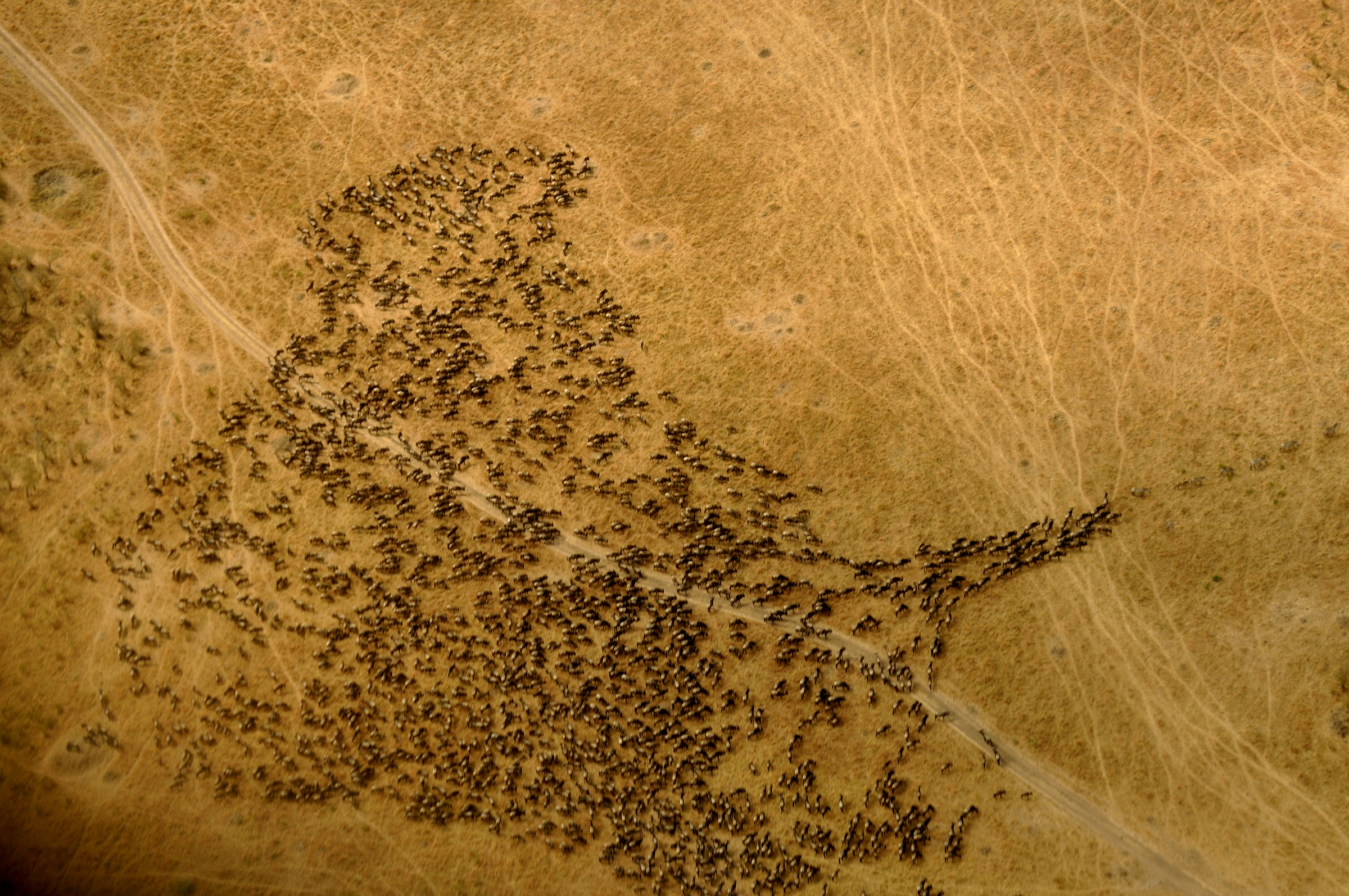
Wildebeest are known for their annual migration to new pastures. Wildebeest usually begin their migration in the months of May or June when drought forces them to go on the move. However, if it is a particularly dry year, they may begin their migration earlier than usual because of the decrease in vegetation. The reason that the wildebeest is a migratory animal is because the grass that it feeds on is not a very good provider of energy and minerals, so it has to move around in order to get adequate nutrition. Factors that affect migration include food, water, predators, and also phosphorus level. Phosphorus is a crucial element that is necessary for all life forms, and it has been found that grass during the dry season has a very low phosphorus composition, and at an insufficient level for the wildebeest’s survival if it remained stationary.

Wildebeest herding and following a few leading zebra in the Masai Mara, Kenya.


As a result, the wildebeest migrates to other grazing areas to feed on grass that has higher phosphorus. A 1992 study by Ben-Shahar and Coe found that besides phosphorus, wildebeest also migrated to areas where the grass had higher nitrogen levels. Ecologists have found that the main reason that wildebeest migrate is to find high quality food during the whole year, although the reduction of predation is another positive benefit.

Also see this Video from National Geographic:
Wildebeest in the millions make their annual migration through East Africa.

Saturday, June 11, 2011

Tropical regions to get even hotter summers within 20 years

Today I've got a interesting article by Daily Mail Reporter (7th June 2011) for you.

Tropical regions in Africa, Asia and South America could see 'the permanent emergence of unprecedented summer heat' in the next 20 years, scientists have warned.

The tropics and much of the Northern Hemisphere are likely to experience an irreversible rise in summer temperatures if greenhouse gas emissions continue at their present rate, a study claims.

Researchers at Stanford University said North America - including the U.S. - southern Europe and China are likely to undergo extreme summer temperature shifts within 60 years.

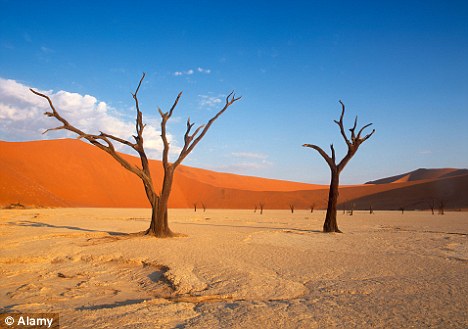
Red dunes in Namibia. Much of Africa, Asia and South America could see 'the permanent emergence of unprecedented summer heat' in the next 20 years


This dramatic change could have severe consequences for human health, agricultural production and ecosystem productivity.

Lead author Noah Diffenbaugh said: 'According to our projections, large areas of the globe are likely to warm up so quickly that, by the middle of this century, even the coolest summers will be hotter than the hottest summers of the past 50 years.'

He added: 'When scientists talk about global warming causing more heat waves, people often ask if that means that the hottest temperatures will become "the new normal".

'That got us thinking - at what point can we expect the coolest seasonal temperatures to always be hotter than the historically highest temperatures for that season?'

To determine the seasonal impact of global warming during the coming decades, Dr Diffenbaugh and co-author Martin Scherer analysed more than 50 climate model experiments.

Among these were computer simulations of the 21st century when global greenhouse gas concentrations are expected to increase, and simulations of the 20th century that accurately 'predicted' Earth's climate during the last 50 years.
Their analysis revealed that many parts of the planet could experience a permanent spike in seasonal temperatures within 60 years.


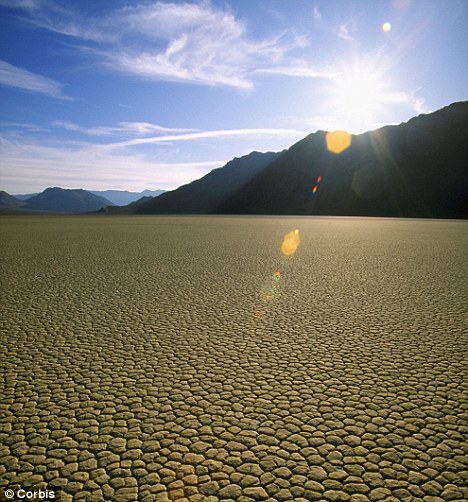
Death Valley in California. North America, southern Europe and China are likely to undergo 'extreme' summer temperature shifts within 60 years


Dr Diffenbaugh said: 'We also analysed historical data from weather stations around the world to see if the projected emergence of unprecedented heat had already begun.

'It turns out that when we look back in time using temperature records, we find that this extreme heat emergence is occurring now, and that climate models represent the historical patterns remarkably well.'

According to both the climate model analysis and the historical weather data, the tropics are heating up the fastest.

The scientists found that the most immediate increase in extreme seasonal heat occurs in the tropics, with up to 70 per cent of seasons from 2010 to 2039 exceeding the late-20th century maximum.

Tropical regions may see the most dramatic changes first, but wide swathes of North America, China and Mediterranean Europe are also likely to enter into a new heat regime by 2070, according to the study.

As an example of the severe consequences of such a drastic change, Dr Diffenbaugh pointed to record heat waves in Europe in 2003 that killed 40,000 people.

He also cited studies showing that projected increases in summer temperatures in the Midwestern U.S. could reduce the harvest of staples, such as corn and soy beans, by more than 30 per cent.

Dr Diffenbaugh was surprised to see how quickly the new, potentially destructive heat regimes are likely to emerge, given that the study was based on a relatively moderate forecast of greenhouse gas emissions in the 21st century.

The results will be published in the journal Climatic Change

Sunday, May 15, 2011

Elephants in the Namib desert

Brilliant footage of a family of elephants crossing the Namib desert and searching for food from BBC's Wild Africa series.