Today I got a sort video for you. It shows an African safari that leads conservationists to mother cheetah and her cute baby cubs. The Big Cat experts are out on a hunt themselves - to find some new wildlife to follow. From the BBC.
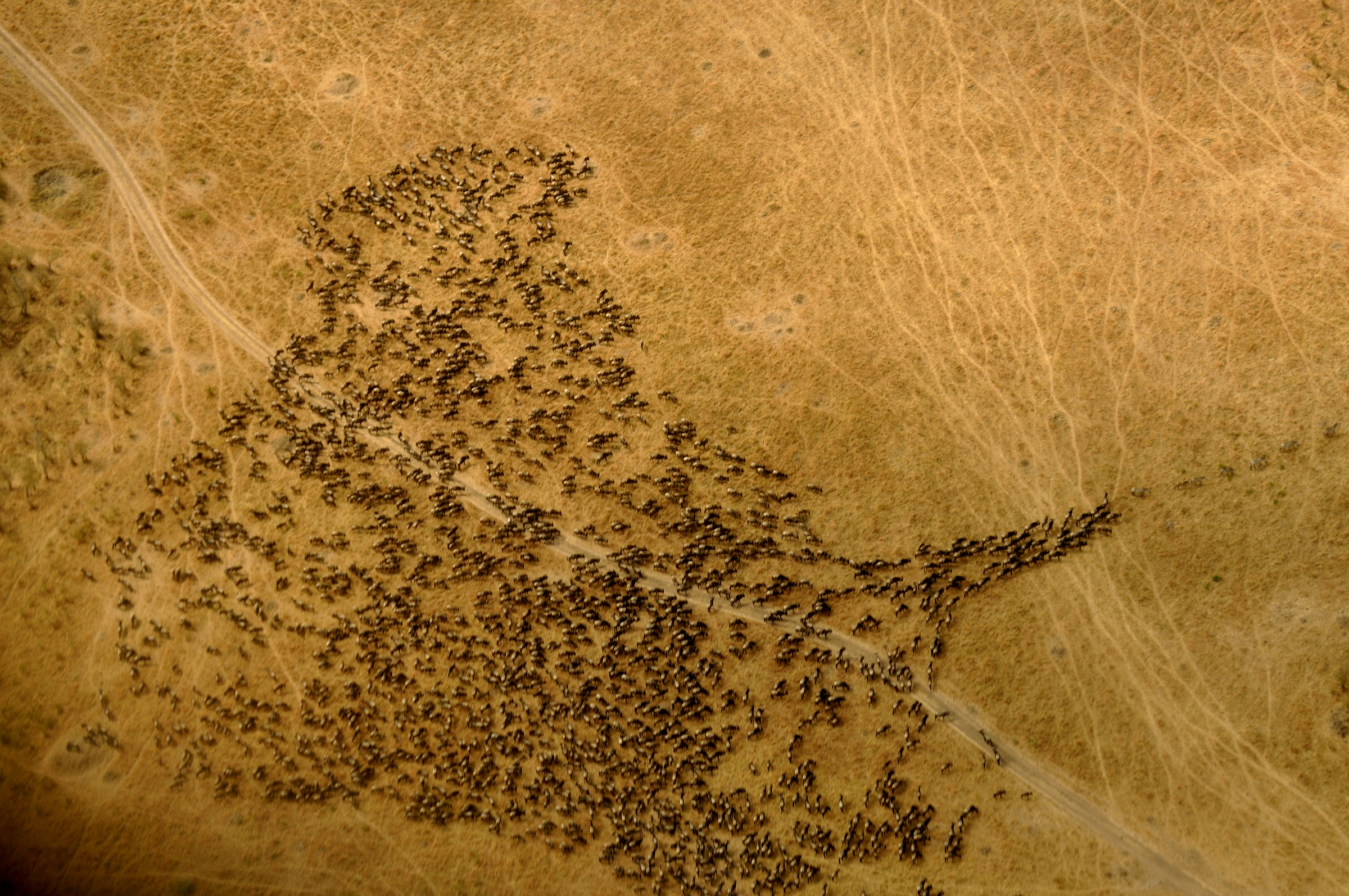
Wildebeest are known for their annual migration to new pastures. Wildebeest usually begin their migration in the months of May or June when drought forces them to go on the move. However, if it is a particularly dry year, they may begin their migration earlier than usual because of the decrease in vegetation. The reason that the wildebeest is a migratory animal is because the grass that it feeds on is not a very good provider of energy and minerals, so it has to move around in order to get adequate nutrition. Factors that affect migration include food, water, predators, and also phosphorus level. Phosphorus is a crucial element that is necessary for all life forms, and it has been found that grass during the dry season has a very low phosphorus composition, and at an insufficient level for the wildebeest’s survival if it remained stationary.
Wildebeest herding and following a few leading zebra in the Masai Mara, Kenya.
As a result, the wildebeest migrates to other grazing areas to feed on grass that has higher phosphorus. A 1992 study by Ben-Shahar and Coe found that besides phosphorus, wildebeest also migrated to areas where the grass had higher nitrogen levels. Ecologists have found that the main reason that wildebeest migrate is to find high quality food during the whole year, although the reduction of predation is another positive benefit.
Also see this Video from National Geographic: Wildebeest in the millions make their annual migration through East Africa.